LIFT: Men. Dance. Life.
The creation of LIFT, and a life dedicated to the work of exploring the lives of Black Men Through Dance
Daryl L. Foster
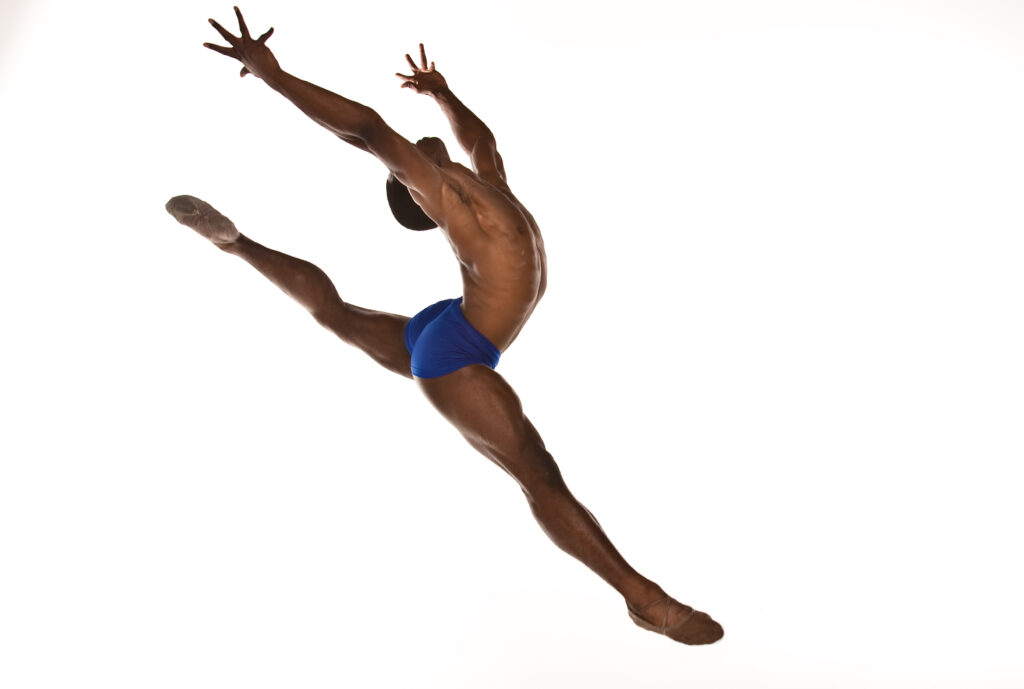
Dancer Chad Jackson was the inspiration for the LIFT logo | Photo by: Tara Lynne Pixley
Thirty years ago, my life’s work began. In 1995, I was a dance major at the University of Alabama—the same university where, three decades earlier, my mother’s sorority sister Vivian Malone was barred from registering for classes by then-Governor George Wallace.1 Thirty years after that monumental segregationist event, I performed on that very campus in a rousing duet with a white woman en pointe. The event’s poster featured a provocative image of the two of us intertwined, evocative of a treble clef. By then, I was already in transition—moving from a simple Black boyhood into the life of a sophisticated, international artist.
During my evolution and transition into an international artist, I was invited to return and choreograph the high school musical for my alma mater, Central High School. Three young men were drawn to me, and I took their interest in dance as an opportunity—I invited them to work with me on a trio for my college composition class. I presented the piece on stage in Morgan Hall before a mostly white, mostly female audience of young artists and scholars. I had plucked these three male pedestrians directly from their everyday lives—lives shaped by economic hardship, a narrow worldview, and limited cultural exposure—and introduced them into a cultural vortex swirling with newness and creative possibility. At that time, 1995, using Hip-Hop and raw vernacular movement was unfamiliar to the academic audience. “Raw” because my movement vocabulary was still in formation; “vernacular” because it was the language of our bodies, what felt most natural and instinctive to us. The music I chose was a track by Goodie Mob, the Atlanta-based Hip-Hop group led by Cee-Lo Green. The track FREE (1995) was a vocal piece sang in the style of a negro spiritual:
“Lord it’s so hard living this life| A constant struggle each and everyday|Some wonder why I rather die than continue living this way|Many are blind and can not find the truth cause no one seems to really know| But I want accept this is how its gone be…they holding and got to let me and my people go| Cause I want to be FREE completely FREE! ” -Cee-Lo Green and Goodie Mob2
I didn’t realize the impact of the work at the time, nor the way it would order my purpose for the next thirty years. But I can still see the image: three young Black men communicating to the world through dance. Their new language. The room’s reaction after the final step was nothing short of genuine. A chilling silence. Then curiosity. Then intrigue. Then applause. That applause felt like validation for all of us. It was a tangible sign that we had been seen, even accepted, in this new world. While that kind of affirmation matters less to me now, back then, it was what I needed to continue my creative evolution. It gave me permission to continue evolving creatively, even though I didn’t yet have the language to name it as such. I wasn’t aware that this moment marked the beginning of my life’s work: investigating Black men through dance and other creative tools, which, ultimately, was the investigation of myself. At the time, the trio felt like a one-off experiment. I moved on, as most dancers at that age do—focused on mastering as many techniques as I could and trying to land a job in a company.
The next time I was able to continue this work was during graduate school at Florida State University. I participated in a master class with Alonzo King, where I met Andre Zachary, a brilliant dance artist who would become a lifelong friend and collaborator. We followed each other’s work closely. One piece of his, in particular, captivated me: a solo titled En Medias Res—Latin for “from the middle out.” It was created using an improvisational structure that stretched reality, disrupted linear narrative, demanded soul excavation, and pushed my body from the inside out! The words of Amiri Baraka and the music of The Roots were brash, bold, and unrelenting—just like me. One line will always stay with me:
“ In my eyes too, the waving craziness spitting him into the jet stream of a black bird with his ass on fire.” -Amiri Baraka3
En Media Res (2005) | Danced by Daryl L. Foster4
I invited Andre to reset the solo on me for my MFA thesis performance. Watching him embody the work with technical precision and fearless confrontation was a revelation. As Baraka’s voice rang out, admonishing “uppity Negroes heading to church,” it struck me like an inspirational gut punch. At the time, I was a lone Black man fighting to complete my MFA in a highly competitive program that seemed, at best, uninterested in understanding me, and at worst, actively invested in pushing me out. I often felt most alienated in moments when faculty showed no recognition of the Black dance companies I had danced or trained with, as if my lineage in the Black expressive tradition held no weight in the academy. And I believed in the unspoken ritual of the first-year weed-out, which only deepened my sense of precarity. Yet ironically, I, too, was once that “uppity Negro” headed off to a quiet, reverent church—built by slaves, no less.5 The contradiction was not lost on me. What impressed me most in En Medias Res was the brash, unfiltered expression of the Black voice—both in Baraka’s poetry and in the music of The Roots, but also in the physicality of Andre’s movements.6 His performance was bold, Black, unapologetic, and embodied a refusal to be muted. I could see myself inside his vision. I felt my own increasingly constrained voice begin to break open in the work’s confrontational gestures. En Medias Res gave me something more than technique—it gave me permission. The improvisational structure of the solo carved space for virtuosic skill and theatrical reckoning, collapsing the fourth wall and confronting the audience with the urgency of Black embodiment. Learning from Andre became a master class in facilitating and executing socially engaged and personally honest performances. That experience instilled in me a long-term commitment to create work that interrogates, insists, and remembers. It set me on a path that, fifteen years later, would culminate in the creation of LIFT.
Over that fifteen-year period, I wrestled with a creative vision I could not yet name—something that followed me, haunted me, and, at times, intimidated me. I ultimately knew I had to do. I knew that creating a choreographic platform where Black Men could fully express themselves through dance was necessary and wanted. Then in 2009, I met Terry Slade, a fellow dancer in Atlanta.7 I approached him and invited him to join me in bringing this long-simmering project to life. He agreed, and we got to work.
The name LIFT ultimately came to me by reflecting on a piece I had previously created for DCDC2, the second company of the Dayton Contemporary Dance Company (DCDC).8 Jawole Willa Jo Zollar had taken me to DCDC to create a work for The FLIGHT PROJECT (2003), a centennial celebration of 100 years of manned flight, which began in 1903 with the Wright Brothers in a bicycle shop in Dayton, Ohio.9 10While in residence, I created a piece titled LIFT, inspired by the image of people trapped in oppressive conditions, yearning for escape, searching for a way out. The metaphor extended beyond choreography—lift, as an aerodynamic principle, is about breaking free from the pull of gravity. In my work, that gravity was oppression.11 I later adopted and currently use the tagline: “Men Dancing to Escape the Gravity of Difficult Situations.”
Terry Slade LIFT Interview (2010) | Dancers Robert Mason,12 Barnard Jackson, & Shawn Evangelista
What began as a conversation between two dancers evolved into a collective vision—one that eventually included ten choreographers, among them the legendary Christopher Huggins and the emerging brilliance of Tim Jones, then a student at Morehouse College.13 We debuted to a sold-out house of curious Atlanta dance lovers. The moment LIFT first premiered on Atlanta’s Woodruff Arts Center stage in 2010, my life’s direction shifted permanently. I had found the axis of my calling. My belief in this work isn’t abstract; it is grounded in the bodies and lives of the nearly eighty Black men I’ve had the honor to teach, mentor, and guide toward fuller expression. Their artistry makes manifest the very purpose that haunted me for so long. LIFT is not just a project. It is my life’s work made flesh that I am blessed to continue to produce.
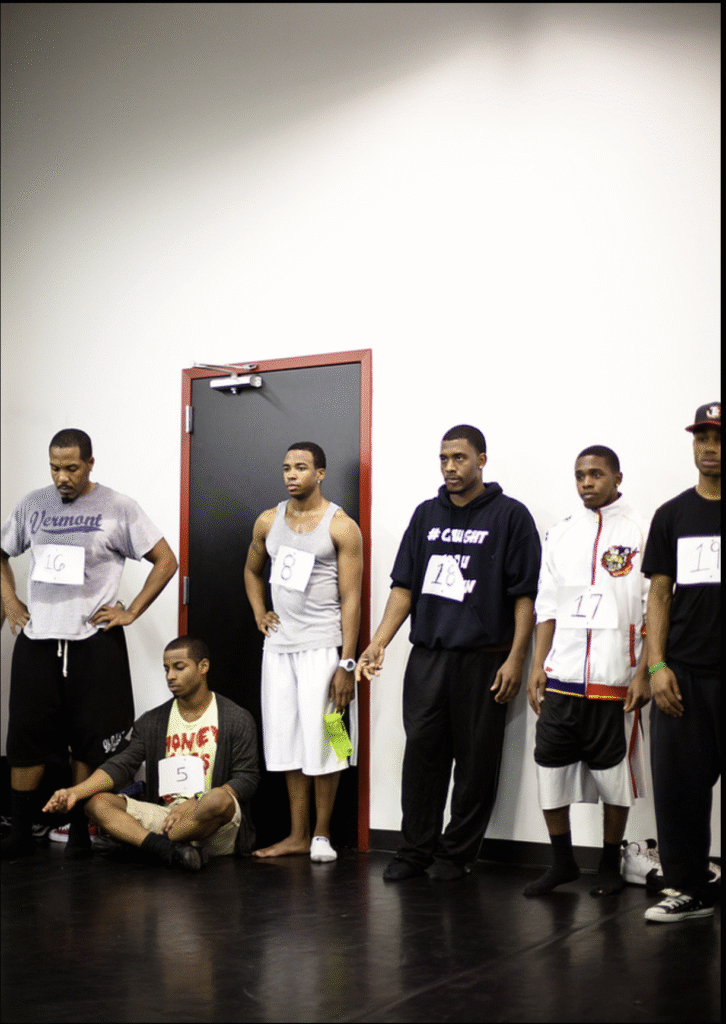
Dancers during auditions for LIFT (2010) | Photo: by Tara Lynne Pixley
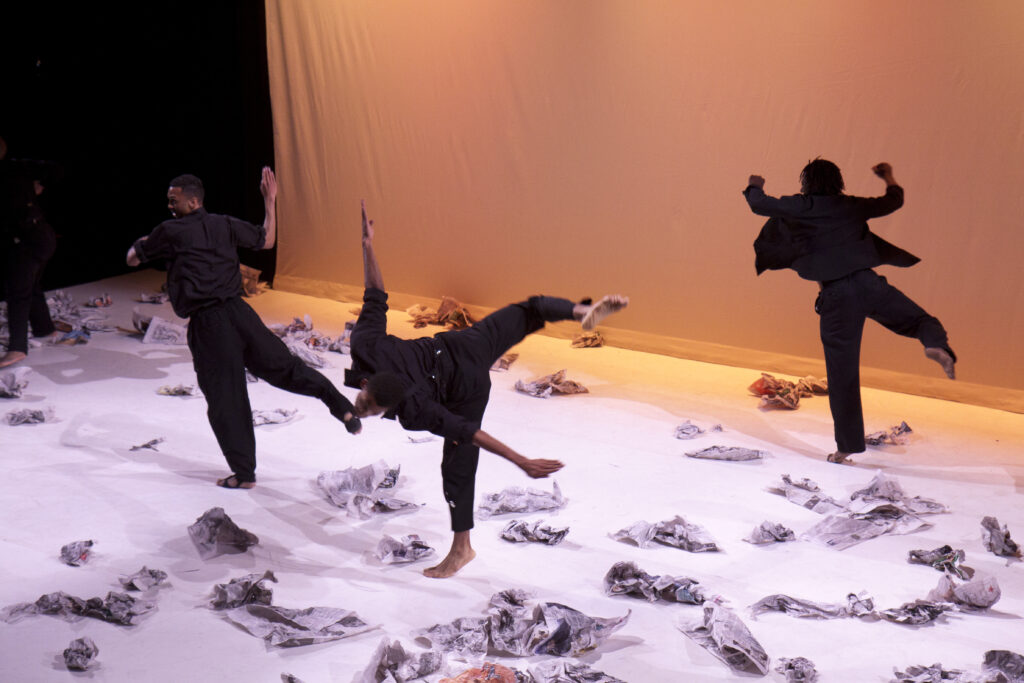
Dancers Nitty Dupree Thomas, Jelani Jones, and Issac Rose in Elapsed Reality (2010) by Tim Jones | Photo: by Tara Lynne Pixley
Most notably, Waiting (2010) by Juel D. Lane, a bold and controversial work, examined the emotional and social consequences of two men forced to suppress their love for one another due to the time and place in which they lived.14 15The piece caught the attention of John McFall, then Artistic Director of Atlanta Ballet.16 After seeing the work, McFall invited Juel to choreograph for the company, making him the first Black Atlantian artist to receive such an opportunity. Waiting would go on to be expanded and eventually premiere in the repertory of Ailey II, marking a significant milestone in Juel’s career and in the visibility of queer Black narratives in contemporary concert dance.17
Waiting (2010) | Choreography by Juel D. Lane | Dancers Juel D. Lane and Jamal Callendar
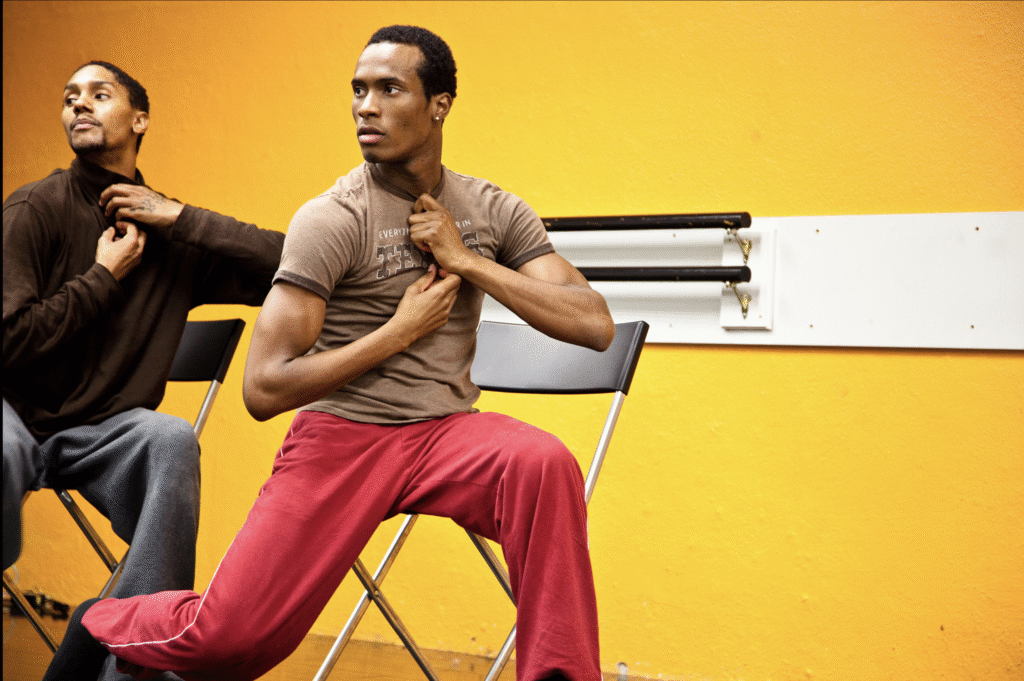
Dancers Juel D. Lane and Jamal Callendar in rehearsal for Waiting (2010)| Photo: by Tara Lynne Pixley
I am also proud of producing my own work for the first iteration of LIFT. I created Broken Ties (2010) to explore father absence through the embodied perspective of Black sons. The piece opens with a young man struggling to tie a necktie, an everyday ritual that becomes a metaphor for what was never passed down. The implication is clear: his father and other male figures were absent. When the father-figure enters, the piece unfolds as a heated duet, an intricate choreography of partnering, resistance, longing, and confrontation. The emotional climax arrives when the father lovingly helps his son tie the necktie correctly, and the two walk together to the son’s graduation. The resolution is satisfying, but I knew it was not representative. Most stories do not end this way. Over half of Black boys in America grow up without their fathers. I say “over half” because the data is inconsistent, ranging from 57% to as high as 75%, depending on the source.18 What I became after creating Broken Ties was something I hadn’t expected: a father figure, in loco parentis, to more than 100 dancers. The work opened a channel for care, responsibility, and presence, an ethos I now carry into every rehearsal, every classroom, every moment of mentorship. [18]
Daryl L. Foster LIFT Interview (2010) | Dancers Jelani Akil Jones and Quinten Porter

Broken Ties (2010)| Choreography by Daryl L. Foster | Dancers: Jelani Akil Jones and Quinten Porter| Photo by: Tara Lynne Pixley
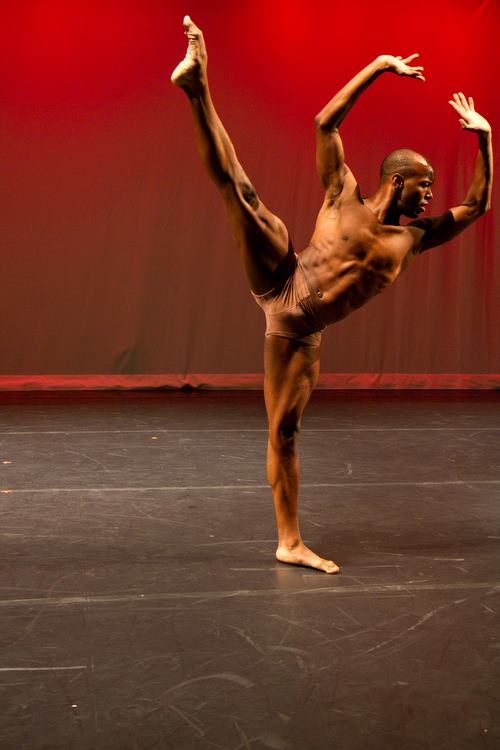
Dancer Trent D. Williams in Profilin’ (2012)| He is currently a professor at Arizona State University| Photo: by Tara Lynne Pixley
Over the years, the work created by generations of LIFT choreographers and dancers has consistently been impactful. Audiences have risen to their feet in tears, moved in ways I still struggle to fully explain. There is something about LIFT that resonates. It has been profoundly transformative—for me, and for the men who choose to participate. Watching Black men—many of whom move through the world under an emotional embargo—take the sacred stage and work through real, often buried, issues is powerful. I came to understand that it was my vulnerability, and what they perceived as a standard of excellence, that gave them permission to meet their own work with a deeper honesty. I’ve invited choreographers to LIFT expecting something entertaining, even celebratory. But what they’ve offered instead has been brooding, reflective, and startling in its emotional depth. For many, the experience is like an exhale. To witness a choreographer move from crafting Hip-Hop pieces meant purely for spectacle to creating contemporary works rooted in unspoken feeling—that, too, feels like an exhale. A release. A return to something honest. And in that return, a new vocabulary emerges.
Taking on the responsibility of caring for artists and bringing their work to the stage is both a privilege and a burden. It requires resources—emotional, physical, and especially financial. Most funding comes with strings attached. I have been asked to make changes that conflict with my beliefs and distort the core of my work. Most often, I’m urged to include women—or, at the very least, to justify their absence. “Could you add just one woman?” they ask. “Maybe a duet with a woman?” The underlying assumption is that the work is incomplete unless it mirrors the heteronormative templates audiences have been conditioned to expect.
I’ve come to realize that many audiences are addicted to their own reflections. They want to see themselves—see their ideals, their fantasies, their relationships—mirrored on stage. Too often, I’m asked, before the curtain even rises, whether the work is “about gay themes.” The question isn’t rooted in curiosity but in a refusal to imagine Black men existing outside of a narrow registers. It reflects a discomfort with the idea that Black men might have interior lives, spiritual longings, emotional depth—lives that are not always tethered to sex, and certainly not to sex with each other. Regardless of how nuanced the choreography, how layered the themes, or how evolved the intention, audiences often still want the same thing: shirtless men, sexy men, men in passionate hetero-romantic entanglements. This isn’t just about desire; it’s about history. For centuries, the role of the male dancer has been to assist, frame, and reflect the feminine star—the étoile. The male dancer was never meant to be the center, especially not in the absence of the feminine form. It’s precisely within that historical omission that I found my opening. I carved out space to build a new narrative, one that centers the stories of Black men. Stories that are not always pretty, not always romantic, but always human. LIFT is not a rejection of the feminine; it is a correction to a long-standing erasure. It is a choreographic conversation between and about Black men, and that conversation is necessary.

Dancer Juel D. Lane in promotional shoot for LIFT (2010)| Photo: by Tara Lynne Pixley
The initial media for LIFT was created by Tara Lynne Pixley, now a professor of visual journalism at Temple University.19 Tara’s photography brilliantly narrated a visual story that paralleled and elevated my choreographic vision. Her images captured the vulnerability, strength, and presence of these Black men in motion, offering a visual counterpoint that danced in tandem with the work itself. From the beginning, I understood that LIFT—this “all-male dance thing”—would require context. Audiences were not accustomed to seeing Black men dance with one another outside of competitive formats or hypermasculine tropes. As the saying goes, “A picture is worth a thousand words.” Tara’s photographs provided that vocabulary. They offered potential audiences a glimpse of what to expect: men dancing across a range of styles—from Hip-Hop to Contemporary—with depth, intention, and emotional clarity. These images generated not only anticipation but understanding. They answered unspoken questions and challenged assumptions about the limitations of the Black male body. They made room for LIFT to be taken seriously, to be felt before it was even seen live. 19
Eventually, Tara moved to California to pursue a PhD at San Diego State University. Her departure left a deep void in both my creative process and my heart. But it also opened a new pathway for me, one I hadn’t fully anticipated. I stepped into the roles of photographer and author, expanding my practice into written and visual forms. It became clear that this work of nurturing and advancing LIFT required multiple modalities of expression. Not just to sustain the project between performances, but to provide deeper context and engagement for the work in the community and for myself. I am the most qualified person to tell my story and to honor the stories of the men I work with. Writing about the dance and creating photography with the choreography at its center allows me to add layers, to make the work more textured and accessible. Some people need to see it. Others need to read it. My responsibility is to make the work legible across registers. My practice is multimedia and multi-modal because it must be. It is as much about movement as it is about memory, about making meaning in more than one language.
Rehearsal of LIFT (2010)| Photo: by Tara Lynne Pixley
Daryl L. Foster’s Modern Class (2014) at Gotta Dance Atlanta
I built LIFT from its inception inside Gotta Dance Atlanta, one of the premier professional dance studios in Atlanta during the 2000s. In that space, concert and commercial dance coexisted in a rare and beautiful marriage. The intention was to cultivate and present commercial dance within a concert framework, placing it alongside Modern, Contemporary, and Jazz forms. It was a pleasure mentoring emerging Hip-Hop choreographers of that era, which pushed them to elevate their craft. They began creating Hip-Hop choreography that reached beyond spectacle, anchoring their work in structure, narrative, and emotional complexity. Choreographers like Codie Wiggins, now a member of Chris Brown’s creative team, embraced LIFT as a platform to explore new choreographic territory. At the time, Codie was a working dancer with major commercial artists, and opportunities for meaningful storytelling in that world were rare. For LIFT, he chose music by a rising female African vocalist, just before the global explosion of Afro Beats. He choreographed a trio that stretched beyond the limits of mainstream commercial conventions. He designed his own costumes and incorporated theatrical masks.
Daryl L. Foster’s Duet (2014) from Community Circle at Gotta Dance Atlanta
What we achieved in that studio—and on those stages—was something most college dance programs still struggle to do: remain responsive to the now. Too many academic programs are still oriented around mid-twentieth-century models, preparing students for a future in modern dance companies, MFA programs, or secondary education. But the dance world has shifted. Today’s artists navigate a robust commercial industry marked by complexity, innovation, and different career pathways. I’m proud to say that I’ve been doing this work—bridging concert and commercial, shaping narrative from raw movement, and preparing dancers for the world they actually live in—for over fifteen years.20
This promo video for the 2013 LIFT is an example of how we blended Technical performance with Commercial Hip-Hop

A visual example of how we beautifully married Hip-Hop to Contemporary and Ballet. Dancers Brandon Womack and Jamal Callendar (dancer with Atlanta Ballet at the time) | Photo: by Tara Lynne Pixley

Citizen LIFT (2018) was an evening-length work that I created to raise awareness about the importance of Black Male participation in the political process. This work posed questions and provided answers to topics that people were afraid to address. One of the biggest questions we wanted to address was why a number of Black men tend not to vote. I curated choreography and visuals to address this and other questions. For example, I inserted a clip from The Cosby Show as an interlude between pieces.21 This clip focused on Cliff Huxtable talking to his son Theo about the realities of life and bills. This clip was poignant because it showed the viewer how a father could intercede at a critical moment and redirect his son back into civic responsibility, just when the best option seemed to be checking out. I followed that moment with a duet performed to “Loyalty” (2017) by Kendrick Lamar. The duet reinforced the idea that Black boys must be reminded of who they are in order to navigate conflicted and aligned loyalties regarding social, cultural, and legal citizenship with their heads held high. In the lobby of the theater following that performance, a man approached me and thanked me. He expressed to me how seeing the performance increased his awareness of Black men and their political dilemma.

Daryl L. Foster Backstage before the performance at the Woodruff Arts Center in Atlanta, Georgia (2012) | Photo: by Tara Lynne Pixley
The lobby is where the magic often happens. It becomes a second venue, an informal stage, where dialogue, recognition, and communion take place. After Citizen LIFT, I learned just how essential it is for us, as Black artists, to speak for ourselves, to offer the world our narratives in our own voices rather than be spoken for or about by those unfamiliar with our lives or our stakes. I often describe the feeling as being at the center of a storm. Around me, my work and the work of others continue to swirl, move, and evolve. But from that center, it can be hard to see clearly how I—and the work—are being received. That disorientation makes it difficult to build sustained dialogue and a consistent support system around my practice here in Atlanta. Many of my peers are engaged in the long process of company building and platform creation. Artists like Terrell Davis,22 for example, are developing their own ecosystems—he’s growing his company in Denver, Colorado. While I remain in meaningful dialogue with a number of artists, what’s absent is a cross-national and diasporic converging of Black men in dance. That absence is felt. It’s not just about visibility; it’s about infrastructure and radical support.23
My abiding hope is that as I continue this work, it will spark genuine, sustained, and expansive interest enough to inspire further investigation. My deepest intention is to go further into the labor of choreographic conversation and the cultivation of the brilliance housed within the minds and bodies of Black men. I want future work to generate not only performances, but also critical inquiry and substantial funding. There remains an urgent need for the work of Black dance makers to be documented, analyzed, and archived. Since the 1990s, when I first began conceptualizing work at the intersection of Black men and dance, the technological landscape has undergone radical transformation. When I launched LIFT in 2010, the tools available for documenting process and fostering community dialogue were limited. Today, the proliferation of digital platforms (social media, blogs, vlogs, and mass media) has shifted the possibilities for performing artists. These tools are not merely supplementary; they are infrastructural to the future. In response, I am developing a comprehensive curriculum that codifies my artistic and pedagogical process. My goal is to develop a flexible and accessible system of transmission, one that can be widely shared, iterated upon, and utilized as a foundation for ongoing dialogue. Where once I felt limited by unfamiliar technologies, I now regard them as integral tools for expansion. I am embracing the learning curve not as a barrier, but as an invitation: to share my choreography and the work of other Black artists more widely, and to envision new futures for Black men in dance that are as expansive as the platforms now available to us.
About the Author
Daryl L. Foster is a choreographer, educator, and scholar celebrating 32 years in dance and 15 years as director of LIFT: Men. Dance. Life., his signature project centering the lives and experiences of Black men. A native of Alabama, Foster holds an MFA from Florida State University and has trained with institutions including the American Dance Festival, Harvard Summer Dance, and the American Ballet Theatre. He began his career performing with the Dayton Contemporary Dance Company (DCDC2) and has since worked extensively in concert and commercial dance, education, and arts administration. In Atlanta, he has served as a dance lecturer at Spelman College, Kennesaw State University, Agnes Scott College, and the University of Georgia. Foster founded EMERGING: A New Choreographers Workshop and leads Stage One, a commercial dance training program, and Camp Marvelous, a summer intensive with Marc “Marvelous” Innis. He is also a published writer and dance critic and continues to perform in film and television. Currently, he is completing two books that chronicle his artistic journey through original writing and photography.
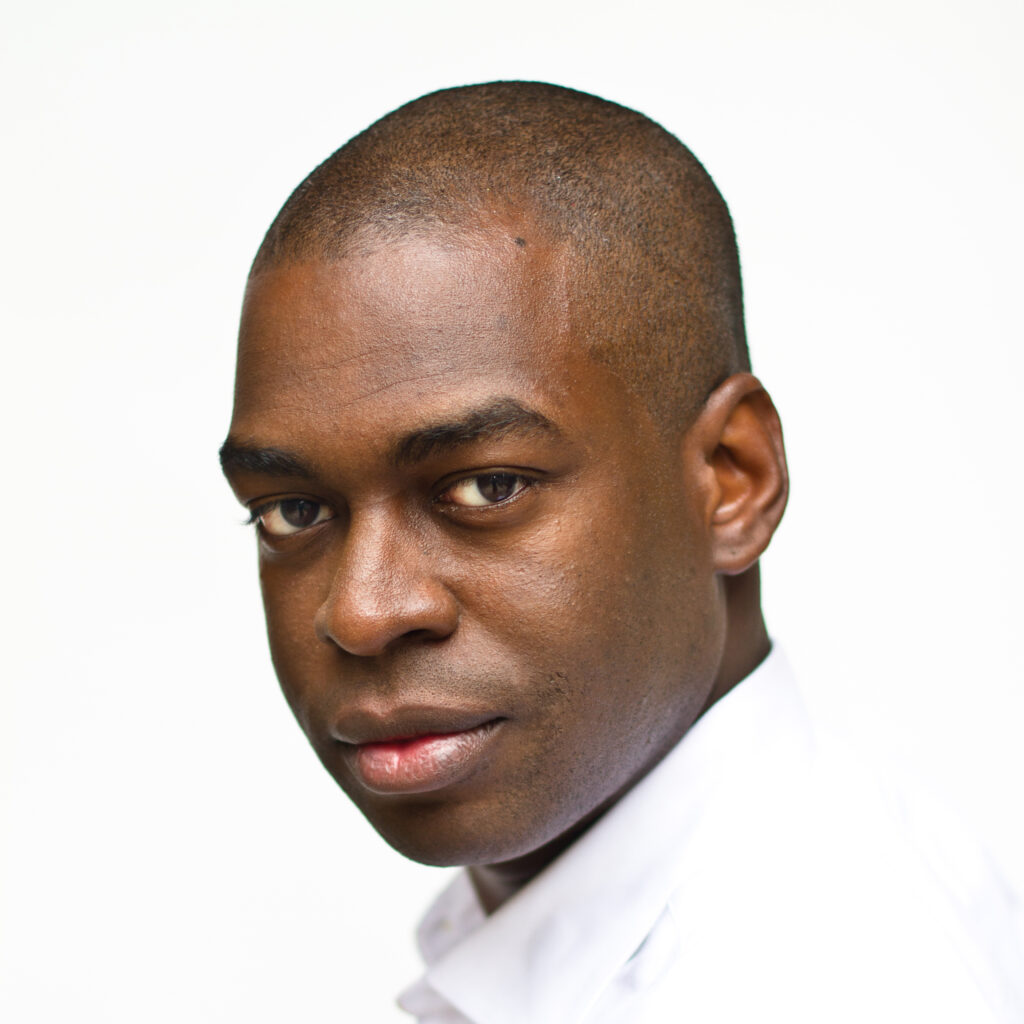
Daryl L. Foster, Founder and Artistic Director of LIFT| Photo: by Tara Lynne Pixley
References
- Vivian Malone Jones was barred from registering at the University of Alabama by segregationist Governor George Wallace in 1963. President John F. Kennedy deployed the National Guard to ensure that she and James Hood could safely register for classes. Vivian Malone later became the first Black person to graduate from the University of Alabama. ↩︎
- “Free” (1995) is a song by Atlanta-based hip-hop group Goodie Mob, featuring CeeLo Green. ↩︎
- The Roots’ song “Something in the Way of Things (In Town)” features the poem of the same name by Amiri Baraka. ↩︎
- En Medias Res features choreography by André M. Zachery, with music by The Roots and the poem “Something in the Way of Things (In Town)” (2002) by Amiri Baraka, Danced by Daryl Foster ↩︎
- I attended First African Baptist Church as a child. The church was built by enslaved people who had been relegated to the balcony of their enslavers’ church—First Baptist Church of Tuscaloosa, Alabama. Today, First African Baptist remains the only Black church in downtown Tuscaloosa and is listed on the National Register of Historic Places. ↩︎
- André Zachery is an American choreographer and dancer, and the founder of Renegade Performance Group. He is based in Brooklyn, New York. ↩︎
- Terry Slade is the co-founder of LIFT: Men. Dance. Life., a showcase of Black male choreographers and dancers based in Atlanta, Georgia. He currently lives in New York City and works in the tech sector. ↩︎
- The Dayton Contemporary Dance Company was founded in 1968 in Dayton, Ohio by Jeraldyne Blunden. It is a historically Black modern and contemporary dance company that holds one of the largest repositories of Black choreographic works. https://www.dcdc.org/ ↩︎
- The FLIGHT PROJECT was created by the Dayton Contemporary Dance Company in 2003 to commemorate 100 years of manned flight, which began in a bicycle shop in Dayton, Ohio, with Orville and Wilbur Wright. The project featured choreography by Doug Varone, Bill T. Jones, Jawole Willa Jo Zollar, and Bebe Miller. My involvement began through conversations with Anna Glass—now Executive Director of Dance Theatre of Harlem—which led to the inclusion of Jawole Willa Jo Zollar, my former professor at Florida State University. ↩︎
- Jawole Willa Jo Zollar is an American Choreographer from Kansas City, Missouri. She is the founder and director of Urban Bush Women.https://urbanbushwomen.org/ ↩︎
- LIFT is a dance choreographed by Daryl L. Foster in 2003 for the Second Company of The Dayton Contemporary Dance Company while he was in residence working on the Flight Project as an assistant to Jawole Willa Jo Zollar. ↩︎
- Robert E Mason II passed away in 2017. He was a dancer, choreographer, and cofounder of City Gate Dance Theater alongside his wife, Jenifer Mason. ↩︎
- Christopher Huggins is an American dancer, choreographer, and master teacher who rose to prominence as a member of the Alvin Ailey American Dance Theater. He is known for works such as Enemy Behind the Gate (2001), which is performed by Philadanco (the Philadelphia Dance Company).https://philadanco.org/ ↩︎
- Juel D. Lane is an American dancer and choreographer from Atlanta, Georgia. A former member of Ronald K. Brown/EVIDENCE, Lane is gaining prominence as a choreographer, with works currently in the repertoires of Ailey II and BODYTRAFFIC. ↩︎
- Waiting… is a choreographic work by Juel D. Lane that explores the tension between two men who share a secret attraction but struggle to publicly acknowledge their feelings. Originally commissioned by Daryl L. Foster as part of the LIFT: Men. Dance. Life. showcase, the piece has evolved through multiple iterations and now appears in the repertory of Ailey II. ↩︎
- John McFall served as the Artistic Director of the Atlanta Ballet from 1994 – 2016. ↩︎
- Ailey II is the second company of the Alvin Ailey American Dance Theater, based in New York City. https://ailey.org/ailey-ii ↩︎
- According to BlackDemographics.com, using data sourced from the U.S. Census Bureau, 46% of Black children live with only their mother. ↩︎
- Tara Lynne Pixley is an American journalist, photographer, and professor currently based in Philadelphia, Pennsylvania, where she is a faculty member at Temple University. ↩︎
- While I was on the faculty of the University of Georgia, Spelman College, and Kennesaw State University, we frequently discussed the future of dance curriculum and its evolving direction. Across the country, many universities are engaged in similar conversations, debating whether to retain traditional curricula centered on American modern dance and European ballet, or to expand into commercial dance and current movement trends. ↩︎
- The inclusion of a scene from The Cosby Show is based on its original 1980s context, predating the public allegations against Bill Cosby, and is analyzed here solely for its narrative and pedagogical value. The primary focus rests on the character Theo, portrayed by Malcolm-Jamal Warner, and the thematic resonance of the exchange, rather than on the personal histories of the actors themselves. ↩︎
- Terrell Davis and Davis Contemporary Dance are based in Denver, Colorado. Davis was a principal dancer and a member of the Cleo Parker Robinson Dance Ensemble. Davis is a native of Chicago, Illinois, and an alumnus of Western Illinois University. ↩︎
- I do want to acknowledge the work of other Black men around the country who are creating spaces for men to dance, network, and worldbuild. Most notable is Fredrick Earl Mosley, who is an award-winning and internationally recognized arts educator, choreographer, and Founder and Artistic Director of Earl Mosley’s Diversity of Dance (EMDOD), which is the springboard for international and intergenerational programs such as Hearts of Men. Mr. Mosely, who was featured as Teacher of the Year (2005) by Dance Teacher Magazine and awarded the Mid-Career Award for Excellence (2016) by the Martha Hill Fund, created Hearts of Men together with Dudley Williams, Matthew Rushing, Clifton Brown, Brian Harlan Brooks, and Jamal Story, as a safe space where men and genderqueer/non-binary individuals could come together to share life experiences through the transformative power of movement. ↩︎